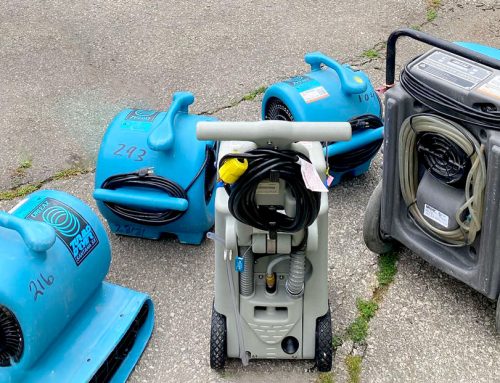
Air scrubbers are extremely useful tools during home restoration because they help remove airborne particles, reduce odours, and keep indoor air healthier while you work. Whether you’re cleaning after water damage, sanding drywall, or managing odours from smoke or chemicals, understanding how to set up and operate an air scrubber properly ensures better results and a cleaner living environment.
When to Use an Air Scrubber
Air purifiers are ideal for:
- Flood recovery, when moisture may release musty or mold-related odours
- Renovation work that creates dust, including sanding, cutting, or demolition
- Smoke cleanup after small incidents
- Contained work areas where clean airflow is important
How Air Scrubbers Work
Air scrubbers work by drawing contaminated air into the unit, passing it through a series of filters, and releasing cleaner air back into the room. This continuous cycling removes dust, odours, and microscopic debris from the environment. Because the machine relies on multiple filter stages working together, each layer plays a crucial role in ensuring efficient and reliable purification throughout your project.
1. First-Stage Pre-Filter
This outer layer captures large debris such as lint, drywall dust, and other visible particles. Removing these heavier materials early protects the inner filters and helps maintain strong airflow.
2. Second-Stage Pleated Filter
The second stage targets smaller airborne particles. Its extended surface area allows it to capture fine dust efficiently. In dusty conditions, this filter generally lasts one to two days, so regular inspection is important during larger jobs.
3. Charcoal / Carbon Odour Filter
When odour control is needed, adding a charcoal layer helps absorb musty air, smoke smells, and chemical odours. This stage significantly improves overall air freshness during restoration and provides added support for the HEPA stage.
4. Built-In HEPA Filtration
The HEPA layer captures ultra-fine particles such as mold spores and microscopic dust. With the earlier stages managing larger debris and odours, the HEPA filter focuses on purifying the air at the highest level.
Using Negative Air Exhaust Tubing
If you need to exhaust contaminated air outdoors or maintain negative air pressure in a work zone, an exhaust tube can be attached to the scrubber. The flexible polyvinyl material expands to a wide diameter, making it easy to route through windows, doorways, or tight spaces. This setup is especially helpful when keeping dust and odours confined to a single area.
Choose Professional-Grade Equipment for Your Project
At Drying Equipment we offer air scrubber rentals as well as first-stage, second-stage, and charcoal filters with Toronto-wide delivery. If you need to replace a filter during your project, our team can help you choose an appropriate air scrubber filter available at our Toronto depot to maintain strong performance.
Beyond air scrubbers, Drying Equipment provides a full range of drying products in Toronto and beyond to help homeowners manage water removal, moisture control, and structural drying. With the right setup, proper filter maintenance, and helpful support from our Toronto team, you can restore your home safely and confidently while keeping indoor air fresh throughout the entire process.