When water recedes and surfaces finally feel dry after a flood, it is tempting to think the worst is over. At Drying Equipment, we often remind homeowners that this stage is only part of the recovery. Even after floors and walls look dry, moisture can linger in the air, creating conditions that slow full restoration and increase the risk of mold. Dealing with the moisture in the air is what helps make sure the problem doesn’t come back later.
As wet materials begin to dry, the moisture they release does not disappear, it becomes humidity in the air. Drywall, framing, flooring, and subfloors can continue to give off moisture for days, sometimes longer in basements or enclosed rooms. This is why a space can feel heavy or musty even when it no longer looks wet. Without addressing this hidden humidity, drying can stall and damp conditions may persist where you least expect them.
The Risks of Leaving Moist Air Untreated
High indoor humidity does more than feel uncomfortable. Moist air slows the final stages of drying by reducing how quickly remaining water can evaporate from materials. It also creates an environment where mold spores can settle and grow once again, even after cleanup has been completed. Overlooking this step can mean trading short-term relief for long-term problems.
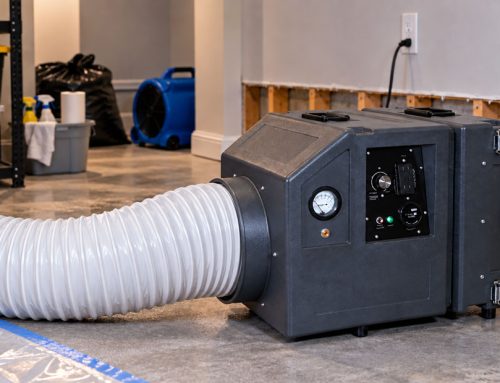
Even when surfaces feel dry, the air inside the home still needs to be addressed. This is where air dehumidifiers and air purifiers come into play. Dehumidifiers remove excess moisture from the air, lowering humidity and allowing wet materials to finish drying efficiently. Air purifiers support this process by capturing fine particles that become airborne during cleanup and drying, including dust and potential spores.
When air movers, dehumidifiers, and purifiers work together, the space becomes more stable. Air movers push moisture out of materials, dehumidifiers pull it from the air, and purifiers help maintain cleaner indoor conditions. This balanced approach shortens recovery time and creates an environment that is far less welcoming to mold.
Practical Tips Once Surfaces Are Dry
After visible moisture is gone, these steps will help keep recovery on track and ensure that drying is complete, not just on the surface:
- Keep drying and dehumidifying equipment running until the air feels dry and humidity is back to normal, because stopping too soon can leave hidden moisture behind.
- Leave interior doors open so air can move from room to room, which helps moisture escape and prevents damp pockets from forming.
- Spend extra time drying basements, and rooms with little airflow, like closets, since these areas dry more slowly and are more likely to trap moisture.
- Wait to put walls, trim, flooring, or paint back in place until everything is fully dry, so moisture is not sealed inside where mold can grow later.
Finishing the Drying Process with the Right Equipment
Completing flood recovery often comes down to having access to the right tools and knowing how to use them effectively. Dehumidifiers and air cleaning equipment work best when they are properly sized for the space and placed where moisture and airborne particles tend to linger, especially in basements and rooms with limited airflow.
The team at Drying Equipment helps homeowners choose setups that match their space and recovery goals. Homeowners can rent air purifiers and more from our Toronto facility to support cleaner air while humidity is being brought back to normal levels. For projects where stronger filtration is needed, our Toronto air scrubber rental options use professional HEPA systems designed to capture fine particles like dust, mold spores, and other contaminants that can be released during drying and cleanup. We also offer air purifier rentals in Toronto and beyond for homeowners who want a simple, effective way to improve indoor air conditions during recovery.
To make the process easier, Drying Equipment provides delivery and pickup across the Greater Toronto Area, so homeowners can focus on restoring their space without worrying about transport or setup. With the right combination of equipment and practical guidance, treating the air becomes a natural extension of the drying process, helping stabilize the environment and allowing families to settle back into their homes with confidence.