Even the smallest kitchen, bathroom, and laundry leaks can ruin hardwood, laminate, vinyl, and carpet fast, and quick action is often the difference between a simple dry‑out and costly replacement. If you’re dealing with a dishwasher drip, a toilet supply line burst, or a washing machine overflow, here’s how to keep damage small and manageable.
Top mistakes to avoid
- Mopping up and walking away: Surface dry doesn’t mean subfloor dry. Moisture can remain under planks and along edges, leading to odours, cupping, and mold.
- Trapping moisture in cavities by keeping cabinet doors closed and leaving toe‑kicks in place.
- Keeping wet mats or rugs on wood or laminate, which causes staining, cupping, and odours.
- Using direct heat (space heaters/heat guns) on hardwood, which can cause checking and warping.
- Not checking edges and transitions: Moisture wicks under baseboards, thresholds, and into subfloors; ignoring these areas lets damage spread.
Your first steps when water appears
- Stop the source: Close the fixture’s shutoff valve or the main water supply and halt the leak at its origin (tighten fittings, cap lines, or turn off the appliance).
- Remove the moisture: Use a wet/dry vac on standing water; move rugs and contents; place foil or plastic under furniture legs to prevent stains.
- Expose hidden moisture: Open cabinet doors, remove toe‑kicks, slide appliances forward if safe, and lift an edge of carpet or floating vinyl to vent the subfloor.
- Control the room: Keep interior doors open to the affected area; set heat to 20-24°C; in humid months, keep windows closed to prevent re‑wetting.
Where air movers make the difference
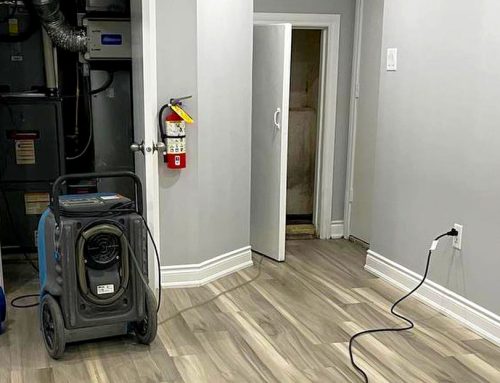
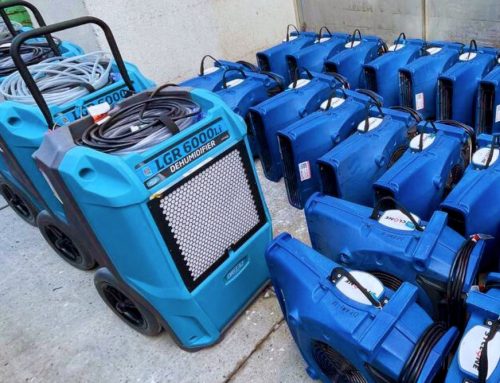
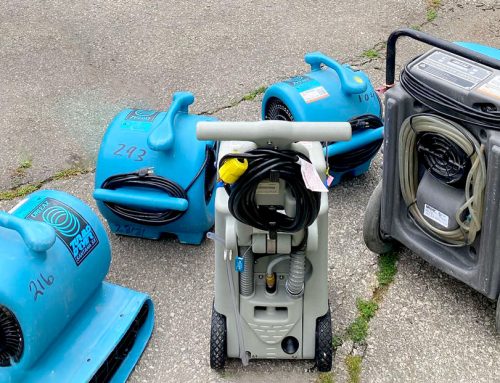
If you react quickly enough, your flooring can often be saved. Air movers and dehumidifiers are the core tools that make that possible. Air movers are high‑velocity floor blowers that sweep a constant stream of air across wet surfaces to speed evaporation, and dehumidifiers pull that moisture out of the air to keep humidity low, so materials keep drying instead of re‑wetting. Together, they create the airflow and dry air your floors and subfloor need to recover.
Hardwood and engineered wood can often return to normal when they receive steady airflow and low humidity, with light cupping relaxing as the boards equalize. Direct heat isn’t necessary and consistent drying conditions typically do the work.
Laminate can sometimes be saved if swelling hasn’t started at the seams. Opening a perimeter and drying the subfloor quickly gives the best chance to keep most planks, with only visibly peaked or softened boards needing replacement.
Luxury vinyl plank and sheet vinyl usually remain intact while moisture travels underneath. Venting at the edges and drying the subfloor thoroughly often allows the flooring to be re‑seated or re‑adhered without replacement.
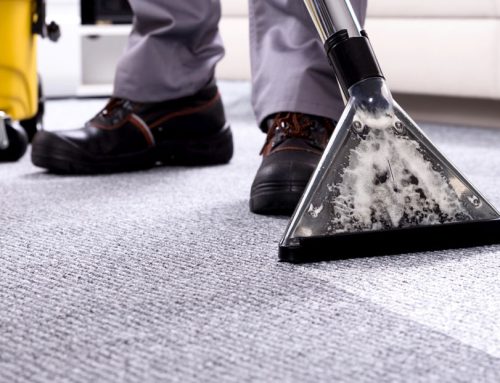
Carpet with pad is frequently salvageable after thorough extraction and controlled drying. Replacing saturated pad while drying the carpet backing and tack‑strip areas helps preserve the face fiber and avoid odours.
If a kitchen, bathroom, or laundry leak caught you off guard, Drying Equipment in Toronto can help you recover fast. We offer same-day dehumidifier and air mover rentals across the GTA, and our team will help you set them up correctly so you protect your floors and achieve a fast, thorough dry-out.