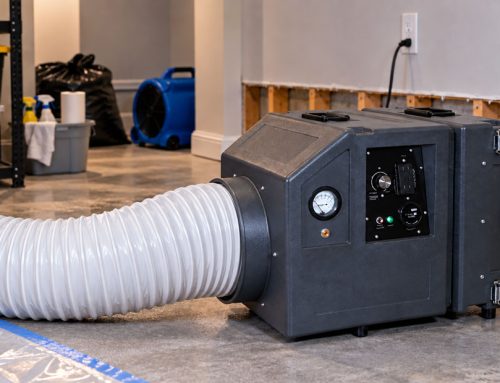
When a home is being dried after water damage, most of the focus is on removing moisture from floors, walls, and other visible surfaces. While that is an important part of the process, it is only one side of what is happening. As materials begin to dry, the air inside the home is also changing in ways that are not always obvious.
Drying is not just about surfaces, it is about how moisture and particles move through the air during recovery.
How Drying Changes Indoor Air
Drying products work by pulling moisture out of materials and releasing it into the surrounding air. As water evaporates from carpets, drywall, and subfloors, humidity levels increase. At the same time, airflow from fans and other equipment can disturb particles that were previously settled.
During this stage, the air may contain:
- Moisture being released from wet materials
- Dust and debris from affected surfaces
- Fine particles from drywall, insulation, or flooring
This is a normal part of the drying process, but it means the air inside the home is actively carrying more than just moisture.
Why Air Needs to Be Managed During Drying
If moisture and particles are not controlled, they can continue circulating throughout the home. This can slow drying, reduce comfort, and allow contaminants to settle in other areas.
Even as surfaces improve, homeowners may notice:
- A heavy or damp feeling in the air
- Dust moving through the space
- Odours becoming more noticeable during drying
This is why drying works best when both the materials and the air are managed together.
The Role of Filtration in the Drying Process
Air scrubbers help clean the air by pulling it through specialized filters. High-quality air scrubber filters available at Toronto‘s Drying Equipment are designed to capture fine airborne particles that are released during drying, preventing them from spreading through the home.
As the air cycles through the system, fewer particles remain suspended, helping improve indoor air conditions while drying continues.
Odours are another common issue during this stage. As moisture leaves materials, trapped smells can be released into the air. Using a charcoal filter available at our Toronto drying company helps absorb these odour-causing compounds, reducing musty smells and improving overall comfort.
Why Drying and Filtration Work Together
Drying equipment and air filtration are most effective when used at the same time. While drying products from our Toronto rental service help remove moisture from materials, filtration systems manage what is released into the air.
Together, they help:
- Keep humidity from building up
- Prevent particles from circulating
- Reduce lingering odours
- Create a more stable drying environment
This combined approach allows drying to move forward more efficiently and helps prevent issues from returning later.
How Drying Equipment Can Help
At Drying Equipment, we help homeowners across the GTA manage both sides of the drying process. From our Toronto location, we provide access to professional drying products, air scrubbers, and filter options that work together to support a complete recovery.
Our team helps guide homeowners on how to use these systems effectively, including where to place equipment and how long it should run. With delivery and pickup available across the Greater Toronto Area, it is easier to set up a proper drying environment without delays.
By managing both moisture and air quality during drying, homeowners can move from a damp space to one that is clean, stable, and ready to return to normal.